Publishing Drives SEO Rankings and Traffic

Publishing genuine, relevant, and helpful content is the cornerstone of search engine optimization success. This white-hat strategy aligns with search engine priorities, delivering better rankings, impressions, clicks, and keyword diversity. To illustrate, consider two websites in different segments of the same industry, nicknamed for their content approaches: Fear Inc., a cautious veteran that publishes sparingly, and Cowboy Up LLC, a bold newcomer embracing frequent content.
White-Hat vs Black-Hat: SEO Arms Race
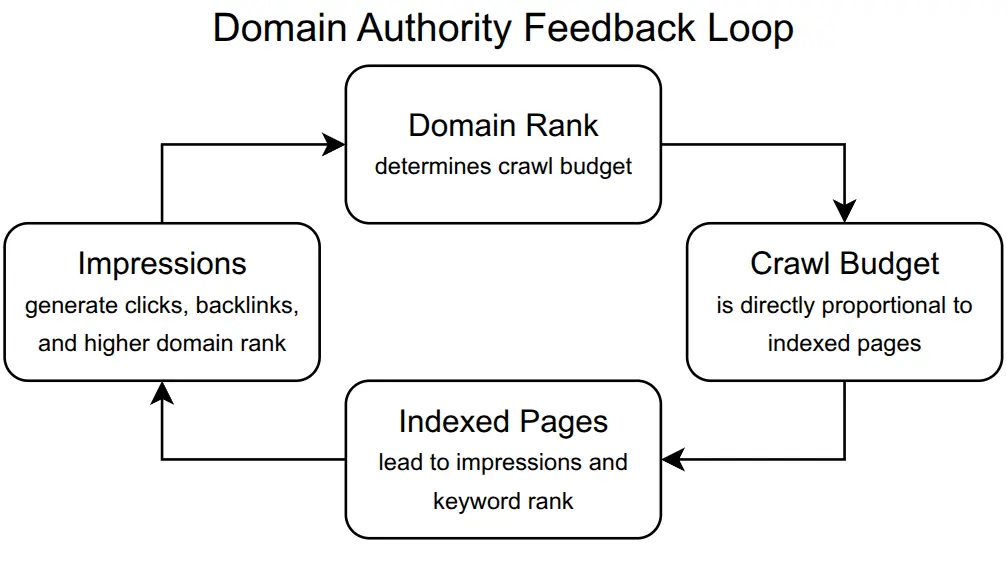
In the SEO arms race, strategy determines the victor. Like the tortoise in a classic fable, white-hat SEO builds lasting success through ethical, search engine-compliant tactics, thriving in this dynamic landscape. At RicheyWeb, we leverage the SEO Success Cycle—where Domain Rank determines crawl budget, crawl budget drives indexed pages, indexed pages boost impressions, and impressions fuel higher Domain Rank—to deliver sustainable growth. Black-hat SEO, the hare’s risky gambit, faces mounting challenges, leading to costly recoveries. Here’s why white-hat wins.
Markdown Alternates Experiment: AI-Friendly Web Content

The Hypothesis
As artificial intelligence increasingly crawls and indexes web content for training data and retrieval systems, the question arises: could we make our content more accessible to AI by offering it in cleaner formats? This article documents an ongoing experiment at RicheyWeb.com to test whether providing Markdown alternates of web pages—advertised through standard HTTP Link headers—improves AI content ingestion.
Read more: Markdown Alternates Experiment: AI-Friendly Web Content
Page 9 of 9